Wyoming Toad

wyomingtoad-caseygirard

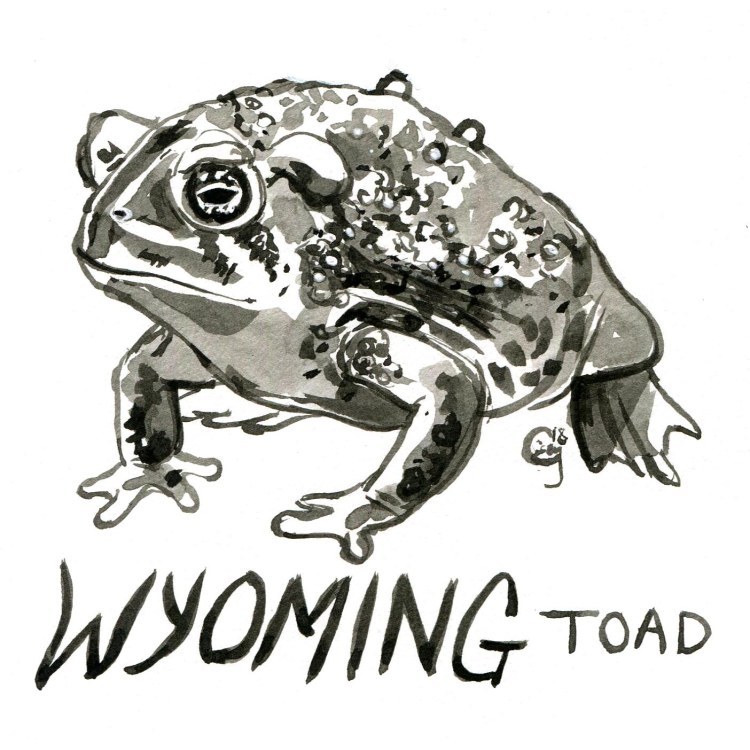
About Them: A toad that was thought to be extinct, but was found on private land. From that group of toads multiple groups have been working together to bring the toads back to a self sustaining population. Presently they continue existing in the wild because of reintroduced young every year although, the efforts are getting closer to seeing the toads reproduce in on their own.

These are a species created from a glacial divide from thousands of years ago. They evolved to survive in southern Wyomings. They are a palm sized toad that swims a lot more than I was expecting of a toad.

Their plight: There is not one specific reason why the toad declined. There are multiple factors that played a role, sprayed pesticide, altered landscape – diverting water from ponds, and the dreadful amphibian killer – chytrid fungus. 

What we should consider: The toads are seeing recovery because everyone is working together. This is a marvelous story of private land owners, Fish and Wildlife, zoos and citizen scientists coming together and taking action. If all species on the Endangered Species Act had this kind of care behind them we would see a lot more success. Even with that, recovery takes years possibly decades. It is always important to remember that when judging the ESA on how well it is performing.

Please remember the ESA has already been changed. States are going to be more responsible for implementing and creating recovery plans for endangered species within their borders. It is more important than ever to look locally to help.

I wanted to point out this well phrased line by Kelsey Dayton from her WyoFile article “Amphibians are considered indicator species and often when populations decline it’s a sign of problems within the ecosystem that can later impact other species.” Humans are part of the ecosystem too, we are lucky in that we can change it to suit our needs, but there will be a point of no return for our survival. The amphibians are showing us how important it is to be careful.

What is being done: Private land owners are on board allowing their land to be reintroduction sites for the captive breed toads. Many organizations have come together to research these animals and sort out what they can do to make a self sustaining wild population again.

How to help: Continue bringing awareness. Call into state senators when legislation is being passed that could affect the continued support of policy that protects wildlife and waterways. Support locally.

Support can be:

  • donating to science groups
  • helping to ensure funding to the organizations that creating breeding programs
  • being a citizen scientist through
    • land restoration project
    • trash clean ups
    • species counts
    • bio blitzes
  • getting people you know excited about how incredible our planet’s biodiversity is.

Joining your local Audubon Society or other local conservation group is a great first step into finding activities and ways to become a citizen scientist and environmental advocate.

Further Reading, my sources:

https://www.npr.org/2017/06/19/533203933/wyoming-toads-rebound-as-states-seek-endangered-species-act-reforms

https://www.youtube.com/watch?v=bxyp5K_Ztf8

National Geographic’s version https://www.youtube.com/watch?v=RHVIymD3Ppk

Kansas City Zoo’s version https://www.youtube.com/watch?v=AuELw7PjpQA

http://amphibianrescue.org/tag/wyoming-toad/

http://amphibianrescue.org/2011/08/25/the-fascinating-wyoming-toad/

https://www.fws.gov/mountain-prairie/es/wyomingToad.php

http://wyomingnaturalist.com/html/herps/a_wyoming_toad.html

https://www.stlzoo.org/animals/abouttheanimals/amphibians/frogsandtoads/wyomingtoad

http://www.reptilesmagazine.com/Once-Thought-Extinct-In-The-Wild-The-Wyoming-Toad-Makes-A-Comeback/

https://www.wyofile.com/once-nearly-extinct-the-wyoming-toad-may-recover/

https://phys.org/news/2016-06-hundreds-toads-free-at-risk-animal.html

https://www.kansascityzoo.org/conservation/wyoming-toad/

http://saveamphibians.org/wyoming-toad/

http://wildlife.org/usfws-releases-final-recovery-plan-for-wyoming-toad/

http://www.wyomingpublicmedia.org/term/wyoming-toad#stream/0

https://defendersblog.org/2013/08/road-to-recovery-wyoming-toad/

[This is a blog of my opinions. I speak for myself. I am a one person team and if I have misinterpreted a fact or made an error please feel free to get in touch to correct me. I will make edits and updates to post. I would appreciate corrections to be polite. I will not engage in hate.]
Lange’s Metalmark Butterfly

langesmetalmark-caseygirard

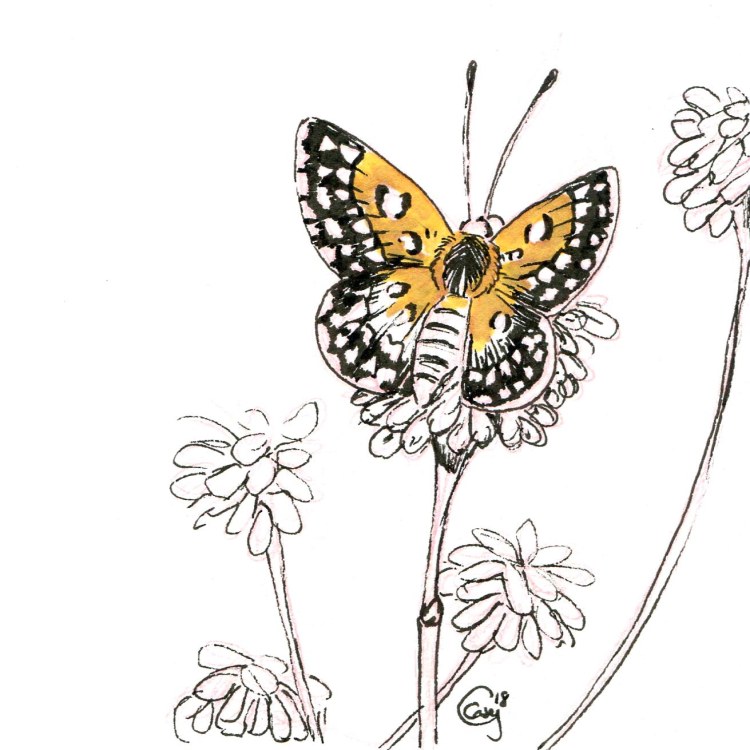
About Them: These are of the family Riodinidae. Their habitat is only along the southern side of the San Joaquin River in Antioch within the constantly shifting sand dunes. They, like the plants they rely on, are endemic to this small range. They need the Naked Stemmed Buckwheat plant to feed and reproduce. Without this plant they will not lay eggs. They also feed from the Antioch Dunes Evening Primrose and the Contra Costa Wallflower.

They continue to survive because in 1980 55 acres were established as the Antioch National Wildlife Refuge to protect this extremely unique habitat allowing the butterfly some needed habitat.

Their plight: This butterfly lives in an extremely narrow range. The land compares to the Galapagos in its specificity and unique species that live within it. Unfortunately it was an easily accessible location, with sand that was perfect for making bricks which, were needed to rebuild San Francisco after the 1906 earthquake. This drastically changed the environment. Then it became an industrial area with fossil-fueled energy plants surrounding the National Wildlife Refuge, inadvertently adding too much nitrogen to the sand/soil.  This extra nitrogen hinders the growth of the native plants and helps the non-natives to flourish taking over the land area which also limits the space for the native plants.

What is being done: They have a captive breeding program going, but they aren’t able to make it self sustaining. They still need to gather females from the wild each year.

They have also begun to add sand back to the dunes from dredging of the river. Amazingly this actually helps the environment and the industry in the area. The industry doesn’t have to pay to have someone take the sand which, they need to clear so ships can pass and the refuge gets free sand it really needs to help rebuild the habitat that was disturbed.

They regularly do non-native plant removal as well. This is done by hand, with a weed-wacker or with weed killer. They do their best to use the weed killer sparingly, but there are times when it is needed.

How to help: Bring awareness and educate others. Call into state senators when legislation is being passed that could affect the continued support of policy that protects wildlife, waterways and lands. Support locally.

Support can be:

  • donating to science groups
  • helping to ensure funding to the organizations that creating breeding programs
  • being a citizen scientist through
    • land restoration project
    • trash clean ups
    • species counts
    • bio blitzes
  • getting people you know excited about how incredible our planet’s biodiversity is.

Joining your local Audubon Society is a great first step into finding activities and ways to become a citizen scientist and environmental advocate.

Further Reading, my sources:

https://sardisandstamm.wordpress.com/about-the-wildlife/langes-metalmark-butterfly/

https://www.youtube.com/watch?v=tFwXy8bq6lU

https://www.fws.gov/refuge/Antioch_Dunes/ (note, no substantial access to the public)

https://www.fws.gov/refuge/antioch_dunes/LMB_Surveys.html

https://www.eastbaytimes.com/2017/08/03/can-you-count-butterflies-feds-need-help-tallying-rare-antioch-species/

https://bioaccumulation.wordpress.com/2017/07/23/make-every-butterfly-count-at-the-antioch-dunes-2017/

https://www.sfgate.com/bayarea/article/Weed-killers-threaten-Lange-s-metalmark-butterfly-3451816.php

https://essig.berkeley.edu/endangered/endangered_apodlang/

https://planetgreenrecycle.com/fundraising/environment/langes-metalmark-butterfly-animals

https://xerces.org/langes-metalmark/

https://www.eastbayexpress.com/oakland/the-last-stand-of-langes-metalmark-butterfly/Content?oid=2478934

[This is a blog of my opinions. I speak for myself. I am a one person team and if I have misinterpreted a fact or made an error please feel free to get in touch to correct me. I will make edits and updates to post. I would appreciate corrections to be polite. I will not engage in hate.]
Sonoran Pronghorn

sonoranpronghorn-caseygirard

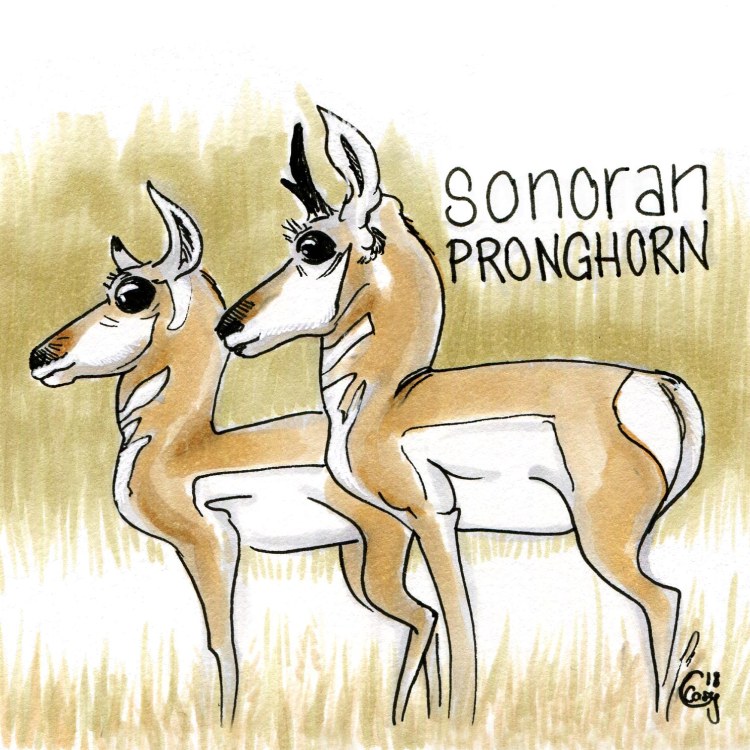
About Them: Sonoran Pronghorn are one of five subspecies of the Pronghorn. The Sonoran only live in the Sonoran Desert between the US and Mexico.

These are incredible animals that lived through the last ice age. They evolved to live with the animals before that ice age which, caused them develop their unique traits. They can run over 50 mph, this was to get away from Dire Wolves and Saber Toothed Cats. They are able to do this because of their tiny powerful legs and their huge lungs, heart, and trachea that allow for air to flow quickly. They have huge eyes, they are the same size as an elephant’s, these are high on their head on both sides.

Their plight: These are long range migrators. They need vast open space without fences or roads. Because much of their territory crosses ranch land and country border walls they get trapped. As fast as these pronghorn can run they can’t jump, so a fence is a major barrier. They are over hunted. Their habitat is changing as the climate changes. Lack of yearly rains causes the food produced to be scarce. In the past they would migrate to better locations, but they are now hemmed in to these limited ranges.

What we should consider: What are ways we can allow for their migration across the land? Are there ways to implement fences that still make way for the Pronghorn? Given that they managed to live through a the mass extinction, the Ice Age, there is possibly much we could learn from them on how to deal with climate change.

What is being done: Captive breeding programs are in place and they are preserved on the National Wildlife Refuges in the US. There are between 80-160 left in the US (range given to date range within found reference material).

How to help: Continue bringing awareness. Call into state senators when legislation is being passed that could affect the continued support of policy that protects wildlife, national land and waterways. Support locally.

Support can be:

  • donating to science groups
  • helping to ensure funding to the organizations that creating breeding programs
  • being a citizen scientist through
    • land restoration project
    • trash clean ups
    • species counts
    • bio blitzes
  • getting people you know excited about how incredible our planet’s biodiversity is.

Joining your local Audubon Society is a great first step into finding activities and ways to become a citizen scientist and environmental advocate.

Further Reading, my sources:

https://www.nationalgeographic.com/animals/mammals/p/pronghorn/

https://www.desertusa.com/animals/pronghorn.html

https://defenders.org/sonoran-pronghorn/basic-facts

https://www.nps.gov/orpi/learn/nature/pronghorn.htm

http://www.bbc.com/earth/story/20170403-americas-pronghorns-are-survivors-of-a-mass-extinction

http://www.ens-newswire.com/ens/may2008/2008-05-22-01.html

https://medium.com/usfws/rare-sonoran-pronghorn-are-rebounding-5de9c5343ded

https://www.fws.gov/refuge/Kofa/wildlife/pronghorn.html

[This is a blog of my opinions. I speak for myself. I am a one person team and if I have misinterpreted a fact or made an error please feel free to get in touch to correct me. I will make edits and updates to post. I would appreciate corrections to be polite. I will not engage in hate.]
Red Wolf

This is a tough species for me to write about. I feel deep rooted attachment to this animal because I am from the South East and it makes me feel powerless to enact change if the very place I come from does not see eye to eye with me and seems to have no interest in opening their mind to alternative view points. 

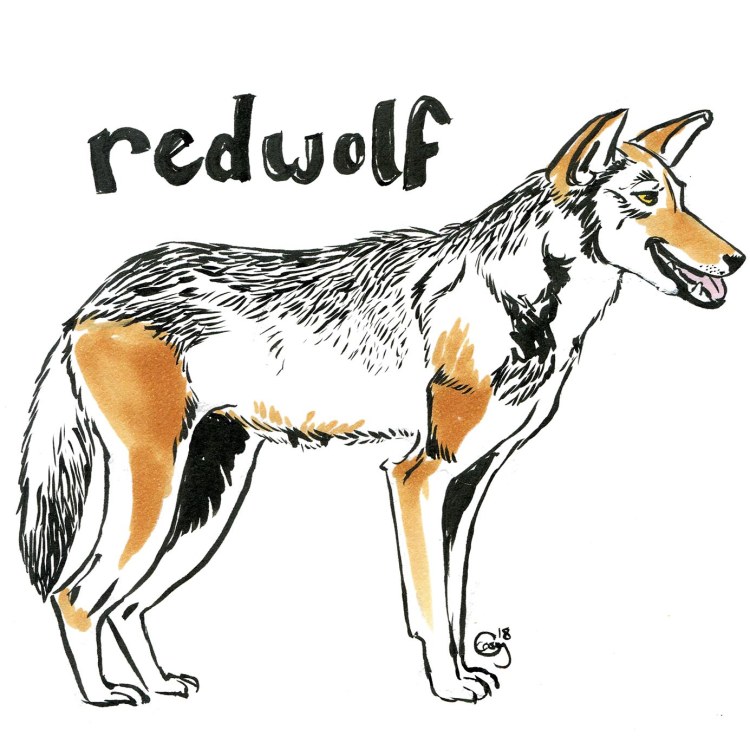
I was at the Life and Science Museum, Durham NC, this past June and was able to see their breeding pair. This is the female trying to stay cool in the heat of a southern summer.

redwolf-caseygirard

About Them: Red Wolves are a smaller wolf. There is a heated argument that they are a species born from Coyote and Gray Wolf breeding from long ago, but that is not clear.

Their plight: They are more or less extinct in the wild. By nature their territory crosses protected lands and private lands. They are predators so they will potentially cause damage to these private lands by consuming deer or potentially, livestock. The Red Wolves had been reintroduced into the wild after a multi-decade breeding program, but a few years ago because of out cry Fish and Wildlife Services allowed a ‘don’t know no fault’ clause. This meant if a wolf was shot on private land and the owner claimed they thought it was a Coyote they would not be held accountable. Since, that was allowed the wolf population is again almost gone. There is also the problem or natures way that Red Wolves breed with Coyotes. Once this happens they are no longer genetically Red Wolves.

What we should consider: Enough people must come together within the regions that were territory for this wolf to help these wolves become reestablished. Without the aid of locals there is no chance to bring this predator back. I believe this is why Fish and Wildlife and other organizers of the captive breeding program are choosing to recapture these wolves and keep them in captivity. The land for these wolves is presently not controlled by people interested in dealing with a predator.

These people aren’t necessarily wrong in their feelings either, it is really difficult to deal with an animal that scavenges and takes food from you. Most people that have land where these wolves have been introduced don’t necessarily have the means to handle the inconveniences a wolf would cause them. It’s also an uneven burden put on these people in that area. Additionally, federal and other government interventions on the American idle of freedom can come across poorly. Implementation of conservation laws have to be handled with care because you need everyone in contact with the plan to help.

What is being done: A captive breeding program exists and given a wild population is not presently viable the plan is to grow the population of captive wolves to 400 individuals.

How to help: Have conversations with people that don’t agree with you. Try to be kind and attempt to find a compromise. Bring awareness and educate others. Call into state senators when legislation is being passed that could affect the continued support of policy that protects wildlife, waterways and lands. Support locally.

Support can be:

  • donating to science groups
  • helping to ensure funding to the organizations that creating breeding programs
  • being a citizen scientist through
    • land restoration project
    • trash clean ups
    • species counts
    • bio blitzes
  • getting people you know excited about how incredible our planet’s biodiversity is.

Joining your local Audubon Society or other local conservation group is a great first step into finding activities and ways to become a citizen scientist and environmental advocate.

Further Reading, my sources:

[This is a blog of my opinions. I speak for myself. I am a one person team and if I have misinterpreted a fact or made an error please feel free to get in touch to correct me. I will make edits and updates to post. I would appreciate corrections to be polite. I will not engage in hate.]

https://news.nationalgeographic.com/2018/06/red-wolf-hunting-policy-animals/

https://www.fws.gov/southeast/wildlife/mammal/red-wolf/

https://nywolf.org/ssp/red-wolves

The Life and Science Museum in Durham North Carolina

https://defenders.org/red-wolf/basic-facts

http://www.iucnredlist.org/details/3747/0

https://www.washingtonpost.com/news/animalia/wp/2018/04/25/the-effort-to-save-red-wolves-in-the-wild-is-failing-a-five-year-review-says/?utm_term=.c4f09ecd1710

http://www.nhptv.org/natureworks/redwolf.htm

https://blogs.scientificamerican.com/extinction-countdown/8-years-until-red-wolf-extinction/

https://www.nwf.org/Educational-Resources/Wildlife-Guide/Mammals/Red-Wolf

https://www.biologicaldiversity.org/species/mammals/red_wolf/

https://wildlandsnetwork.org/campaigns/red-wolves/

http://thetruthaboutredwolves.com/

https://www.coastalreview.org/2018/07/nc-legislators-blast-red-wolf-plan/

https://redwolves.com/newsite/

Piping Plover

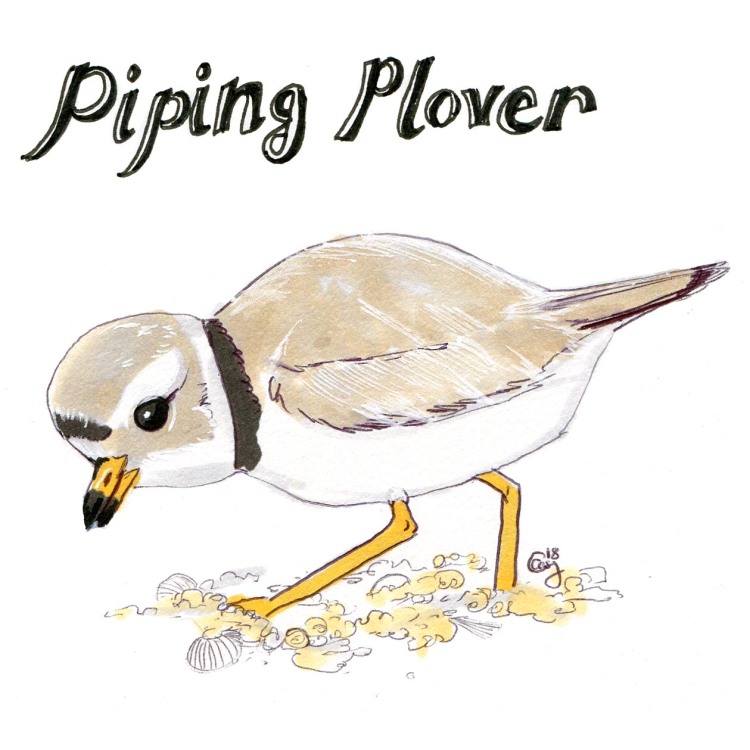
pipingplover-caseygirardAbout Them: Piping plovers are one of the adorable little birds you see running about in the surf. They spend most of there time on the ground to move about and they are able to blend into the environment so well it can be almost impossible to see them. This is unfortunately part of why they are having such a hard time surviving. Their bodies and their eggs aren’t seen until it is too late.
Their plight: They are trying to share the same beach and waterway space as humans and their pets. These birds used to use most of the states east of the Rocky Mountains, 37 states, for breeding and wintering. Now that space is very limited where it is free of human encounters such as damming, purposeful flooding, dogs off leash running through nests or chasing the birds, car driving on beaches, humans walking through or chasing the birds.

What we should consider: There are many people that would be content to use the beach so they can enjoy watching wildlife. As a birder, I actually try to get off the beaches by 10-11 on weekends because it is so unsettling to watch how most people use the beach. It hurts watching people and dogs chase birds. It is beautiful to watch birds fly suddenly in a flock, but making them do this is not ok. Birds on a beach are resting, some have just migrated 1000s of miles and are worn out. They deserve to use the beach how they want to, it’s their only home. Dogs need to be on a leash when in a public space that is for multiple uses. There are designated dog runs and fenced in fields. Also, why does anyone other than a lifeguard/coast guard need to be driving on a beach?

What is being done: Advocacy groups are doing there best to get beach activities controlled and limited. They are setting up physical barriers between nesting pairs and beach goers. They are helping to create legislation that puts in place formal protections and by defining what is safe beach and coastal land use by humans.

How to help: Protect the dunes and coastal habitats by staying off them and keeping dogs on leashes so, they aren’t destroying habitat or wildlife.

Continue bringing awareness. Call into state senators when legislation is being passed that could affect the continued support of policy that protects wildlife and coastal lands. Support locally.

Support can be:

  • donating to science groups
  • helping to ensure funding to the organizations that creating breeding programs
  • being a citizen scientist through
    • land restoration project
    • trash clean ups
    • species counts
    • bio blitzes
  • getting people you know excited about how incredible our planet’s biodiversity is.

Joining your local Audubon Society is a great first step into finding activities and ways to become a citizen scientist and environmental advocate.

Further Reading, my sources:

https://www.allaboutbirds.org/guide/Piping_Plover/overview

https://www.fws.gov/midwest/endangered/pipingplover/pipingpl.html

https://www.fws.gov/plover/facts.html

https://www.audubon.org/field-guide/bird/piping-plover

http://defendersblog.org/2014/07/turtles-tourists-thrive-cape-hatteras-national-seashore/?_ga=2.198515951.1954249476.1538766560-1514208625.1538766560

https://defenders.org/piping-plover/basic-facts

https://defenders.org/success/cape-hatteras-protections-upheld

http://defendersblog.org/2014/07/turtles-tourists-thrive-cape-hatteras-national-seashore/?_ga=2.198515951.1954249476.1538766560-1514208625.1538766560

https://www.biologicaldiversity.org/programs/public_lands/off-road_vehicles/index.html

https://www.biologicaldiversity.org/species/birds/piping_plover/index.html

http://www.nhptv.org/natureworks/pipingplover.htm

[This is a blog of my opinions. I speak for myself. I am a one person team and if I have misinterpreted a fact or made an error please feel free to get in touch to correct me. I will make edits and updates to post. I would appreciate corrections to be polite. I will not engage in hate.]

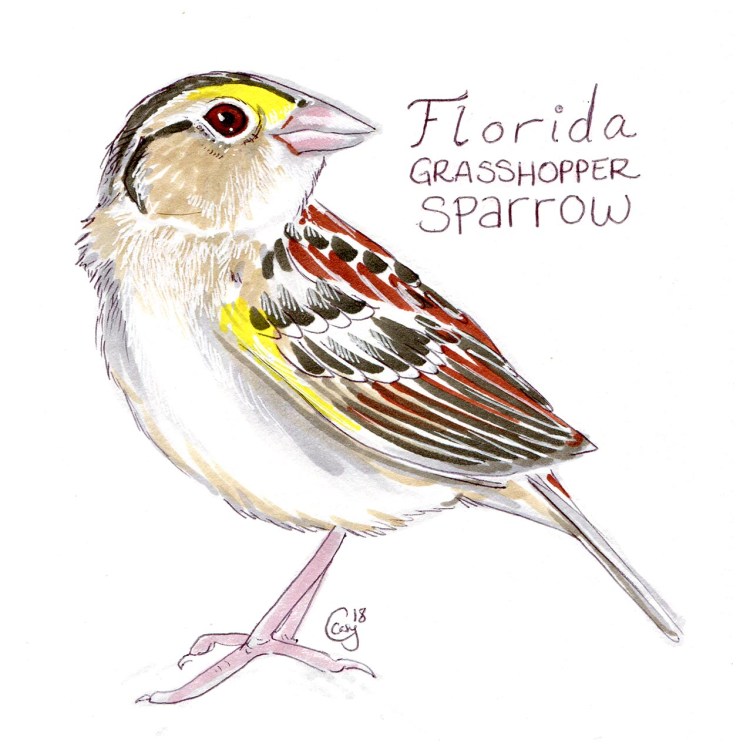
Florida Grasshopper Sparrow

FGS-caseygirard

About Them: A specific subspecies of the Grasshopper Sparrow that’s unique to the prairies of Florida. They have beautiful coloring with dark lining and spotting on their back surrounded by almost white edging. Then they have yellow above their eye and at the shoulder of their wing. They also have dark stripes across their crown with a light stripe that is almost white down the center. Their breast is lighter with no markings. You would most likely hear these birds instead of see them if you visited their habitat. You would hear an insect like call that rings out across the fields they are found in. Generally you will hear this in spring and early summer as males are advertising for a mate.

Their plight: This sparrow has suffered habitat loss, but additionally and perhaps worse now is the invasion of red fire ants. The sparrow nests on the ground so, if an ant colony is nearby it is able to decimate any sparrow babies.

Then recently they have discovered a protozoan parasite that attacks the birds organs and causes death. This is the kind of problem you see when species get to such low population size. If anything major hits, there is not room for rebound because almost all animals will likely be affected and there won’t be enough left to make a new population. 

What we should consider: Species of Florida are under more pressure than most species. In fact the first bird to go extinct after the ESA was in place was a bird that only lived in Florida, the Dusky Seaside Sparrow. The Florida Grasshopper Sparrow is really close to extinction in the wild very few are left, think under 50 if that. They did find unbanded birds in the spring of 2018. To bolster the Grasshopper Sparrow species and not letting this specialized subspecies go should matter. 

What is being done: A breeding program has begun to help build back up the population and it is seeing success. You can see videos of fledglings on the the Florida Grasshopper Sparrow facebook page. Additionally they are setting up predator detectors around sparrow nests that are located so they can neutralize the threat. Habitat continues to be restored with controlled burns. Finding ways to battle the protozoan are also in the works.

How to help: Continue bringing awareness. Call into state senators when legislation is being passed that could affect the continued support of policy that protects wildlife and waterways. Support locally.

Support can be:

  • donating to science groups
  • helping to ensure funding to the organizations that creating breeding programs
  • being a citizen scientist through
    • land restoration project
    • trash clean ups
    • species counts
    • bio blitzes
  • getting people you know excited about how incredible our planet’s biodiversity is.

Joining your local Audubon Society is a great first step into finding activities and ways to become a citizen scientist and environmental advocate.

The Florida Audubon did have a call for volunteers in 2013 when conservation of this sparrow began. Be on the look out for more opportunities like that. -> http://fl.audubon.org/news/citizen-scientists-needed-help-florida-grasshopper-sparrows

Further Reading, my sources:

https://www.kissimmeeprairiefriends.org/florida-grasshopper-sparrow-fund.html

https://www.audubon.org/magazine/fall-2017/inside-race-save-florida-grasshopper-sparrow-north

https://blogs.scientificamerican.com/extinction-countdown/is-this-the-year-the-florida-grasshopper-sparrow-goes-extinct/

http://fl.audubon.org/news/florida-grasshopper-sparrows-vs-grasshopper-sparrows-whats-difference

http://fl.audubon.org/news/florida-grasshopper-sparrow-endangered-species-free-fall

https://www.audubon.org/magazine/march-april-2013/the-most-endangered-bird-continental-us

http://www.archbold-station.org/html/events/newsletters.html

https://youtu.be/c-UX2_QCPzI

https://youtu.be/UUEwDvl8EXs

https://youtu.be/VMYYDC89-7M

[This is a blog of my opinions. I speak for myself. I am a one person team and if I have misinterpreted a fact or made an error please feel free to get in touch to correct me. I will make edits and updates to post. I would appreciate corrections to be polite. I will not engage in hate.]

(this is less than I originally wanted to write, but I caught a cold, hoping for a rebound myself after some rest)

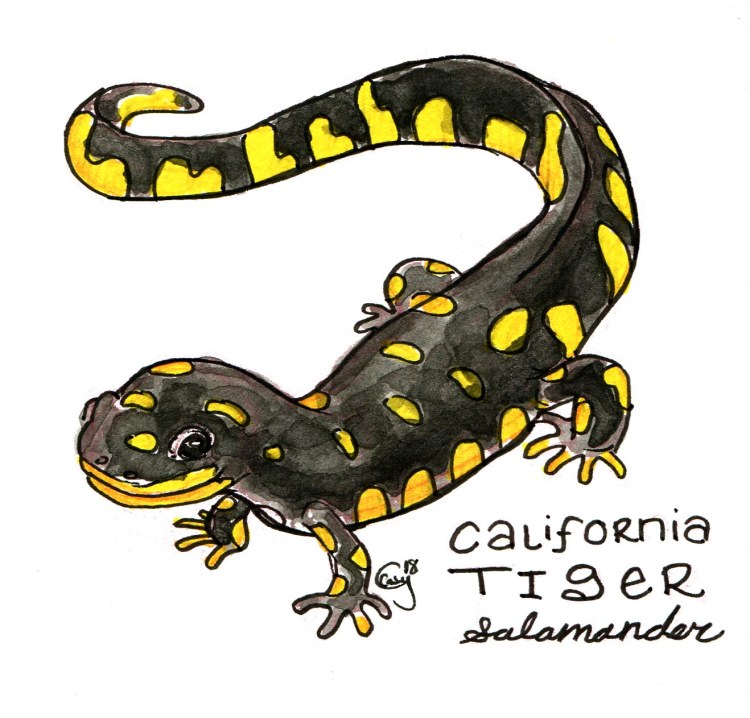
California Tiger Salamander

cts-caseygirard

About Them: A large black and yellow salamander that is endemic to California. There are other Tiger Salamanders, but the California Tiger Salamander is genetically different than the other subspecies. The CTS are best equipped to deal with the habitat of California’s grasslands and vernal pools. Vernal pools are small bodies of water that are only filled during the wet season. This means the life that flourishes in them is fairly specialized and used to periods of no water.

During the dry season CTSs use burrows generally dug by small mammals to survive. They go into aestivation, kind of like hibernation. The distance between these burrows and the vernal pools can be as far as a mile.

Their plight: This is another species that needs a kind of habitat that is very difficult to meld into human development. Large open grassland or foothill spaces with safe tracks for a small amphibian to walk through. These are often used for development of homes and roads leaving the salamander few pathways that aren’t interrupted by human traffic.

Then they need depressions capable of being vernal pools, generally these are also removed because vernal pools breed mosquitos.

With their reliance on the burrows of small mammals, this means they are exposed to the pesticides that are used to try to eradicate the mammals.

Finally the introduction of invasive species such as the nonnative tiger salamander which, are cross breeding with California Tiger Salamanders. The hybrids are strong more aggressive and more able to survive, but they decimate the vernal pools which, will ultimately lead to ecosystem collapse. Nonnative bullfrogs have also been introduced and  are an overly aggressive predator to the CTS.   

What we should consider: The California Endangered Species Act is almost more narrow in its scope of expectation on individual and company compliance than the ESA. It can have such tough requirements even if the farmers, who now own most of the land that is good habitat for these salamanders, are interested in being involved, to be certified is more complicated or expensive than they can manage. One scientist* for Fish and Wildlife found law that allows them a work around to still be able to comply for the safety of these salamanders without being disinterested in participating because of complex paperwork. These laws are needed to help guide humans that don’t totally understand care of habitat and species. These help them make choices that are in the right direction for the environment, but it is equally important that the laws are written so they are also tenable for anyone.

What is being done: The California Tiger Salamander was only recently added to the Endangered Species List. It has been a fight to get attention and follow through for a recovery plan. In 2017 a final recovery plan was created.

How to help: Continue bringing awareness. Call into state senators when legislation is being passed that could affect the continued support of policy that protects wildlife, land, and waterways. Support locally.

Support can be:

  • donating to science groups
  • helping to ensure funding to the organizations that creating breeding programs
  • being a citizen scientist through
    • land restoration projects
    • trash clean ups
    • species counts
    • bio blitzes
  • getting people you know excited about how incredible our planet’s biodiversity is.

Joining your local Audubon Society is a great first step into finding activities and ways to become a citizen scientist and environmental advocate.

Here is FWS’s pamphlet on how to help: https://www.fws.gov/sacramento/es_species/Accounts/Amphibians-Reptiles/Documents/What_You_Can_Do.pdf

Further Reading, my sources:

https://www.fws.gov/sacramento/es_species/Accounts/Amphibians-Reptiles/ca_tiger_salamander/

https://www.biologicaldiversity.org/species/amphibians/California_tiger_salamander/

http://www.nhptv.org/natureworks/californiatigersalamander.htm

*https://www.wildlife.ca.gov/Science-Institute/Featured-Scientist/Tag/tiger-salamander

https://www.pacificforest.org/species/california-tiger-salamander/

http://www.reptilesmagazine.com/Endangered-California-Tiger-Salamander-Gets-Tunnel-Under-Highway/

http://www.reptilesmagazine.com/Wild-Lizards/Californias-Super-Salamander-Dilemma/

https://lindsaywildlife.org/animal-ambassador/california-tiger-salamander/

https://www.fws.gov/sacramento/es_species/Accounts/Amphibians-Reptiles/Documents/What_You_Can_Do.pdf

http://www.californiaherps.com/salamanders/pages/a.californiense.html

[This is a blog of my opinions. I speak for myself. I am a one person team and if I have misinterpreted a fact or made an error please feel free to get in touch to correct me. I will make edits and updates to post. I would appreciate corrections to be polite. I will not engage in hate.]

Kirtland’s Warbler

The Kirtland’s Warbler is proof of success from the Endangered Species Act. This bird was down to 167 breeding pairs in the 1970’s when it was one of the first species to be placed on the Endangered Species List for the US. Now it is up to over 2,000 breeding pairs and up for removal from the Endangered Species List.

kirtlandwarbler-caseygirard

About them: These are larger warblers that have a gray cap and back with black streaks then, a bright yellow breast. They have white eye crescents and the males have dark in front of their eye. They have a ting territory for breeding and wintering; Northern Michigan for breeding and the Bahamas in winter. Even their migration track is almost a direct line from place to place making them only over Ohio, Georgia, and Florida with any regular notice.

Their choice for breeding habitat is very specifically jack pine forests, but only if they are six years growth from a fire. Once the trees are over 16 feet tall the warbler will not continue breeding there. This need for such specific habitat is one of the largest reasons this warbler got into peril.

The other reason is Brown-headed Cowbird nest parasitism. Brown-headed Cowbirds lived in the great plains where the Bison grazed. Because of this they constantly moved with the heard and learned to leave their eggs in the nests of other birds. Within this territory and amongst birds that evolved with them, both species were ok. Since humans have altered the land and caused large herds of grazing cattle, Brown-headed Cowbirds have been able to spread into territories of birds that did not evolve with them and they are able to harm the population of those species. The Kirtland’s Warbler is one of those species that has struggled.

What we should consider: Our legislation of the ESA does work. It saved this species from extinction. It contributed to the funding, research, and needed time to give these warbler’s back what they needed to survive. If we could succeed here, we can succeed for other species. 

What is being done: Habitat management is constantly in the works. Forests of Jack Pines are being set up in human controlled ways to provide the Kirtland’s Warbler with the needed habitat to breed. Then, Brown-headed Cowbirds are captured and kept away from these warblers.

How to help: As this species comes off the Endangered Species List support for interventions will be less, namely funding to control Brown-headed Cowbirds. There are enough Kirtland’s Warblers to experience more of the cowbirds, but if after a year or two decline is seen, the controls will need to go back on. Without being on the ESL it will be more complicated to get funding needed to implement this, and this is where independent contributors will be sought out. Be on the look out to see if they need funding.

Continue bringing awareness. Call into state senators when legislation is being passed that could affect the continued support of policy that protects wildlife and waterways. Support locally.

Support can be:

  • donating to science groups
  • helping to ensure funding to the organizations that creating breeding programs
  • being a citizen scientist through
    • land restoration project
    • trash clean ups
    • species counts
    • bio blitzes
  • getting people you know excited about how incredible our planet’s biodiversity is.

Joining your local Audubon Society is a great first step into finding activities and ways to become a citizen scientist and environmental advocate.

Further Reading, my sources:

https://www.fws.gov/midwest/news/878.html

https://www.audubon.org/field-guide/bird/kirtlands-warbler

https://www.allaboutbirds.org/guide/Kirtlands_Warbler/overview

https://www.audubon.org/news/how-makeshift-stereos-could-help-endangered-warbler-find-new-home

https://www.allaboutbirds.org/jack-pine-juggernauts-what-will-happen-to-kirtlands-warblers-after-delisting/

https://abcbirds.org/bird/kirtlands-warbler/

https://ebird.org/science/applied-projects/kirtlands

https://www.wildlife.ca.gov/Conservation/Invasives/Species/Cowbird

https://www.audubon.org/news/plot-twist-congress-considering-law-could-protect-hundreds-more-birds

Atlantic Sturgeon

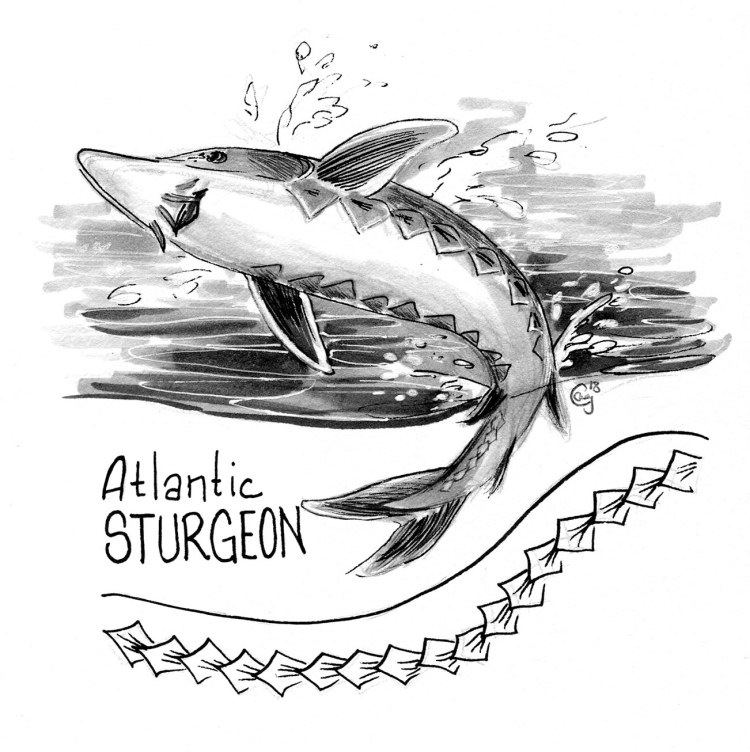
The Atlantic Sturgeon. I picked this one because I love this fish. I think it is strikingly beautiful.

atlanticsturgeon001About them: Atlantic Sturgeon are huge fish once in maturity. They can weigh up to 800 lbs and be as long as 14 feet in length. They are long lived fish, up to 60 years. They do not have scales but scutes which, are 5 rows of bony plates, two rows run along their belly, a row on each side and one along their back. They have a shark like tail, with the top lobe larger than the bottom. They are bottom feeders so they have a snout for rooting in the muck and 4 sensory barbels in front of their mouth.

This is a very old fish. It has been on our earth for millions of years and survived past mass extinctions. Now, humans are making their survival much more complicated.

Historical Data: Sturgeon used to provide a booming business to fishermen, through the adult fish meat and mostly through their caviar. The abundance of food they produced was staggering, but they were horrifically overfished and over a few decades their populations plummeted. Now, this happened in those years of plenty when people of the US were just grasping their impact on species, the late 1800’s and early 1900’s. This is when the US first started putting limits on hunting and fishing. Unfortunately the damage had been done and given that this species has such a long maturity time and 3-5 years between spawning the recovery has been a struggle.

What we should consider: Along with low populations the environments where these fish spawn and live has changed. These are fish that travel up rivers from the ocean to lay eggs. They need just enough river debris for their eggs to attach and enough dissolved oxygen in the water for the eggs, then baby fish to survive. With so much agricultural run off and other pollutants entering the river ways these circumstances are not always present. The other trouble is dredgers and other large boats using the water ways take up enough space in the river as they travel that the adult fish is boxed into contact with the dangerous prop of the boat. Other human activities that accidentally kill this fish are, lost fishing nets and water turbines which suck up water from rivers for other uses. 

What is being done: When the ESA put the 5 populations of Atlantic Sturgeon on the Endangered Species list 2012, it really helped with the funding of needed research and the establishment of protections for this fish along their historical breeding habitats. Since that happened Sturgeon are being seen in their historic sites once again. Although, they are not yet seeing consistent successful breeding, meaning finding young in the rivers. 

How to help: Continue bringing awareness. Call into state senators when legislation is being passed that could affect the continued support of policy that protects wildlife and waterways. Support locally, new legislation means the ESA will need to work more closely with states and even rely more on state funding to continue protections.

Individual support can be:

  • donating to science groups
  • helping to ensure funding to the organizations that creating breeding programs
  • being a citizen scientist through
    • land restoration project
    • trash clean ups
    • species counts
    • bio blitzes
  • getting people you know excited about how incredible our planet’s biodiversity is.

Joining your local Audubon Society is a great first step into finding activities and ways to become a citizen scientist and environmental advocate.

***

Further Reading, my sources:

https://www.richmondoutside.com/2018/08/new-event-celebrates-annual-migration-of-atlantic-sturgeon/

https://www.fisheries.noaa.gov/species/atlantic-sturgeon

https://e360.yale.edu/features/atlantic_sturgeon_an_ancient_fish_struggles_against_the_flow

https://www.bayjournal.com/article/biologists_alarmed_over_lack_of_young_atlantic_sturgeon_in_surveys

https://blog.nature.org/science/2016/05/20/restoring-an-ancient-nursery-for-atlantic-sturgeon/

https://www.bayjournal.com/article/biologists_alarmed_over_lack_of_young_atlantic_sturgeon_in_surveys

http://www.dnrec.delaware.gov/fw/Fisheries/Pages/Juvenile%20Atlantic%20sturgeon%20tracking.aspx

http://www.eagletribune.com/news/haverhill/endangered-status-of-atlantic-sturgeon-up-for-review/article_d7da883c-f540-527f-9e07-25800b6deaf9.html


[This is a blog of my opinions. I speak for myself. I am a one person team and if I have misinterpreted a fact or made an error please feel free to get in touch to correct me. I will make edits and updates to post. I would appreciate corrections to be polite. I will not engage in hate.]

Dusky Gopher Frog

We start with the Dusky Gopher Frog. This is a subspecies of the Gopher Frog, an amphibian that gets it’s name from using burrows dug by gopher tortoises for shelter.

duskygopherfrog-Caseygirard

About Them: The Dusky Gopher Frog, a very specialized creature that used to live across, Louisiana, Alabama, and Mississippi. However, they are so specialized and sensitive they now only inhabit a few ponds in Mississippi and have recently been added to the Sandhill Crane National Wildlife Refuge. The population in the NWR is not yet a viable breeding colony as it takes 2.5 years for a female to mature to breeding age. But males are being heard singing during the breeding season! Hurray some success!

The habitat for this frog is very specific and not very conducive for close human neighbors. They need open coastal plains with specific longleaf-pine trees as the canopy. They need these pine trees to grow far enough apart that there is open canopy for sun to reach the ground. This means that regular fires should move through the area to clear out the under brush. This type of land is necessary for numerous other species on the Endangered Species list, seems unsurprising given this is such a complicated type of land to mush in with human development. Fire is suppressed and often forgotten as a natural phenomenon that plants and animals learned to adapt to. Additionally they need seasonal pools, which dry up during summer, there in, not supporting fish making the frog eggs safe.

duskygopherfrog-habitat-caseygirard

Their current legal battle: They are getting notoriety because, Fish and Wildlife Services referencing the ESA law, is asking that a parcel of private and commercial land in Louisiana be designated as suitable habitat for the frog. This would only be used if the population in Mississippi finds itself under duress. Then they would ask that the land be restored to support a translocated batch of Dusky Gopher Frogs. The landowners and company are challenging the FWS because they have rights to the land for another 20 years meaning they would see a loss in revenue if they had to adhere to the necessary requirements to make the land viable for the frog.

What we should consider: If land is designated as needed for a species we currently ask that the land owner take responsibility for this burden. With so many historical changes to land it can be a lot to make land viable for an endangered species. What can we do to make the land owners incentivized to see this as a positive for their land and not a burden? Presently it really is a problem for a land owner. They find themselves with their land under restricted use, they have to put money into making it work for the species, and the overall land value may have dropped significantly.

How to help: Continue bringing awareness. Call in that we want to allow the ESA to have this reach to reallocate land. Then help change the legislation to incentivize land owners to be on board with this. Honestly it is kind of ridiculous that a land owner who may not care about animals is suddenly responsible for their needs. If enough of our communities want to see species survive we have to take on the responsibility of making that viable.

This can mean:

  • donating to science groups
  • helping to ensure funding to the organizations that create breeding programs
  • being a citizen scientist through
    • land restoration projects
    • trash clean ups
    • species counts
    • bio blitzes
  • getting people excited about how incredible our planet’s biodiversity is

Joining your local Audubon Society is a great first step into finding activities and ways to become a citizen scientist and environmental advocate.

Further Reading, my sources:

https://www.washingtonpost.com/politics/courts_law/theyre-great-little-animals-the-dusky-gopher-frog-goes-before-the-supreme-court/2018/09/29/b928b9b4-bc4f-11e8-8792-78719177250f_story.html?utm_term=.c0536fb61da4

http://amphibianrescue.org/tag/gopher-frog/

https://www.huffingtonpost.com/entry/kavanaugh-endangered-species_us_5b7f15f8e4b0729515114437

https://citiesspeak.org/2018/05/01/what-happens-when-wildlife-conservation-and-economic-impacts-collide/

http://www.biokids.umich.edu/critters/Lithobates_capito/

https://ecos.fws.gov/ecp0/profile/speciesProfile?spcode=D031

https://www.nationalreview.com/magazine/2018/10/01/consider-the-dusky-gopher-frog/

https://www.oyez.org/cases/2018/17-71

https://constitutioncenter.org/blog/looking-ahead-cases-for-the-supreme-courts-new-term

Per inktober! I used Copic markers for the frog portrait and I used a Pentel brush pen for the landscape. I’m testing my skills, I have drawn digitally all year. It’s cool to test how I feel about ink again. Although, I’m not sure I love the smell of marker yet.

[This is a blog of my opinions. I speak for myself. I am a one person team and if I have misinterpreted a fact or made an error please feel free to get in touch to correct me. I will make edits and updates to post. I would appreciate corrections to be polite. I will not engage in hate.]

Inktober US Endangered Species Promts

I want to bring attention to the Endangered Species Act. It is a 45 year old law that is being called into question and is being changed by the current federal legislators. Some changes have occurred through the House Committee of Natural Resources. Then the Supreme Court will hear a case beginning October 1st which, will set precedent for what kind of reach the ESA has to protect land for endangered animals. We need to be paying attention and getting involved, these will have lasting effects. 

To bring attention and start discussion I plan to spend Inktober, a drawing exercise started by Jake Parker, drawing some of the lesser known and under loved species that find themselves on the Endangered Species Act. I know it seems hard to imagine saving some of these species, but each does play a role in the cycle of their environments and I believe it is best if we can find a way to help them survive.

I would love it if more artists participate to help bring the awareness. This is definitely a problem that needs more minds on it; I think in the end the answer for the ESA and our planet’s species is going to come from a community push of citizen scientists, which can be anyone!

If you would like to participate here is the prompt list:

Inktober2018-ESA

Rules, first follow the rules of Inktober

Our additional rule:

  1. Please include the hashtag #inktoberendangered and #protecttheESA 


If you are getting questions, send people back to my blog and instagram. I am going to go deeper with blog posts about each animal as well as some explanations about what is happening to the ESA right now.

If you want to get involved helping endangered and threatened species check in with your local Audubon Society. They are one of the best places to start and with new laws coming on the books they are going to need all the local help they can get for the species within their range.

****

Here are some good places to start learning about the ESA and where it is now:

Fish and Wildlife Endangered Species Main Page

National Resources Committee, their news release page of approved new bills that will affect how the ESA is implemented.

The main bill that gives States more power or to have a say in how an endangered species is protected or not protected.

Dabbling Ducks

Ducks! I have always loved ducks but, they provide such ease of id that I haven’t always focus on them. They are also overwhelming in numbers when you get to see them. The amount of ducks that migrate to the Bay Area and Sacramento Area is incredible. When you drive up to water and it is covered in ducks, you get a different feeling than looking at a tree because you can hear a bird calling and you trying to find the tiny hoping bird amongst the leaves. Also, to find many of the rare ducks you really need a scope for closer looks and I do not have one. Still ducks are beautiful and cool.

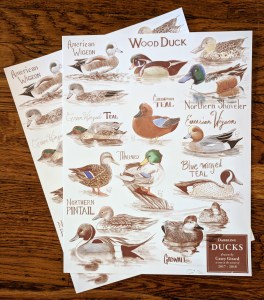
As with the sparrows I put together a poster of all the ducks from my month of drawing them. Here is Dabbling Ducks compilation. I am wrapping up a second poster of ducks that are divers. They are just too large and too many to all be on one 11x 14 poster. The split between diver vs dabbler seemed a perfect split. 

———


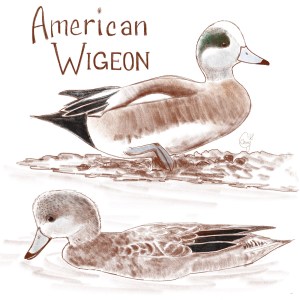
The American Wigeon. I finished this first as just a sepia tone then finished with spot color. These birds are in wintering colors. Their coloring gets brighter once they go into full breeding.

They have been called the Baldpate duck because of the light crest that goes up the male’s forehead. Much like the Bald Eagle is called bald, to early settlers white feathers apparently made them think of a balding head.

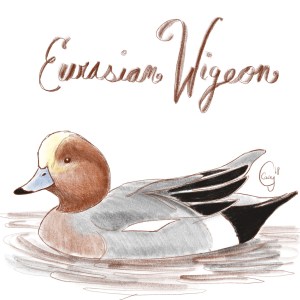
Then here is the Eurasian Wigeon which, I have seen twice. They are rare visitors from Europe and Asia where they are plentiful. They tend to hang with American Wigeons. The males stand out with their rufous head different from the greenish grey head of the American. The females are very difficult to tell apart. I only saw this male.

It’s another beautiful duck from the dabbling group.

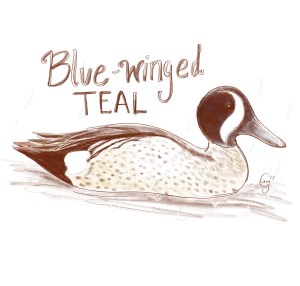
I haven’t seen this in person but, a Blue-winged Teal has a blue patch of feathers for secondary converts, those feathers that you would imagine to be the upper arm of a human. They are also the second most abundant duck in North America behind the Mallard. I would never think that because I so rarely see them around me. It’s all about perspective and realize yours isn’t the only one.

The Blue-winged Teal. I have only seen this bird once on a chilly rainy day. I was out looking for a Tufted Duck which, apparently hasn’t been in the Bay Area in quite some time. I ran into another local birder who leads bird counts at this location and she helped me see the rest of the amazing ducks on the pond. I am still new to spotting the differences in the pattern of ducks across a body of water. I just don’t know all of the patterns that signify different that I should be looking for. Like all the other ways to identify birds it takes practice. 

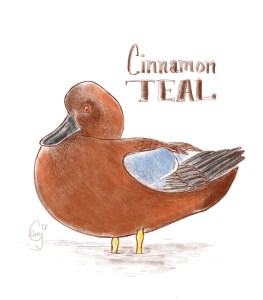
The Cinnamon Teal. This is another duck that I haven’t had much time with. For me it is usually a lone duck amongst the crowd. They are beautiful though. Not only are they a gorgeous Cinnamon color, hence their name, they have that patch of periwinkle blue across their secondary coverts, the shoulder part of the wing.

These ducks are only in the new world and more widespread in South America. We have them in North American only west of the Mississippi and they only just get into Canada for summer.

They dabble for food, using their bill to sift out food. They behave much like a Northern Shoveler.

The Northern Shoveler. This duck is all across the northern hemisphere of the world dropping into the top of the southern hemisphere during winter. There are four distinctive species and the other three, probably descendants of this species, are one each to Australia/New Zealand, South Africa, and South America.

Given where I live if I head to the bay during the winter months I will most likely see these foraging along the mud flats. They are so odd looking with their extra long bill. Their bill actually works like a spoonbill’s or flamingo’s, it has lamellae along its edges which, filter food from water drawn into their bills. It’s pretty hard to confuse these ducks for another. Their head and bill shape are so obvious.

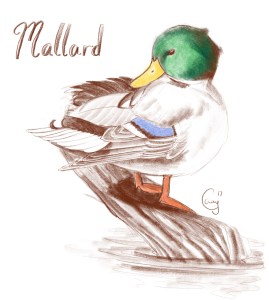
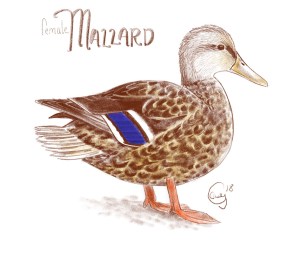
Probably the most common duck on the North American continent, the Mallard. We joke when we are birding that we all over look this beautiful bird for the rarer species around it. Only Male Mallards, of all ducks, have that curly tail feather. An American Black Duck X Mallard hybrid could also have it but, to me that is also Mallard.

The lower image is the Female Mallard. Of the Dabblers most of the female ducks, not all but many, have some variation on this kind of feathering and coloring. There are subtle differences that show you they are different species. Usually the fastest way to tell though, look at what duck they are next too. Most ducks are paired up or in a group of their species. It is a good fast tip to sort out the females because, the males are just so different between the species with brown stripy feathered females.


Another Teal, the Green-winged Teal, the green spot is so green!

I want to talk about the name of this group of birds first, Teal. Teal does recall a color around the eye and on the wings of a few of these small ducks but, the color Teal gained its name from these birds. The birds were called Teals before people described a color with the name Teal. Therefore, a Teal does not have to have the color present to be a Teal. Teals are a group of birds that are small in size, short necked and dabble specifically for vegetation.

I love seeing these ducks. They are so tiny. I happened upon one running with a group of Avocets. 

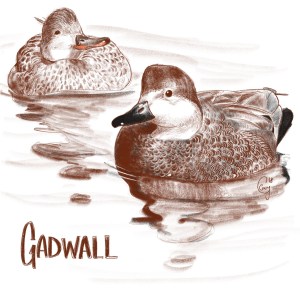
Gadwalls, the understated duck. They may not flash bright colors but, when you take a closer look they are beautifully patterned ducks. The lines across their feathers are vermiculated, they kind of look like they are wearing tweed. To spot Gadwalls in the groups of ducks look for a what you may think is a female duck but, is darker in tone. Their heads are also more rounded than most other ducks. 

These two were exhibiting pairing behaviors. Doing head movements to another male to say, we are together back off.

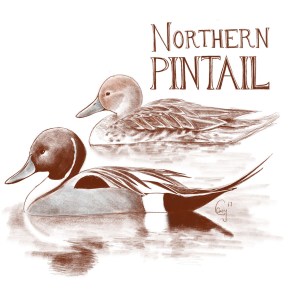
Northern Pintails. These two ducks gave me an easy option for putting the male and female in my picture. These birds breed together for one season then seek out another mate. After the female is incubating the male separates from her to start forming a migrating group.

This Wood Duck I saw during the Great Backyard Bird Count with with Sequoia Audubon Society. There were six of these ducks that day, 3 pairs. I have only drawn the male because their coloring is so striking but, I should draw the female at some point she is also beautiful. They are quite shy ducks. They were mostly hidden in the branches of trees that touched the water. Once it got noisy from human hiking traffic, they totally retreated from view. This was my first time seeing a wood duck for more than a moment. I had seen them in the south twice but, for very brief glances. It was nice to watch them move and behave.

Ducks are part of the group that use wetlands for habitat. Now, wetlands are in decline so this is a complicated balance for them to find habitat. Many ducks use crop fields. There is a system in place in California that is imperfect and many farmers are still frustrated with the birds eating their seed. The system is a series of National Wildlife Refuges around Sacramento to give birds a space to live and be, so they aren’t in the farmer’s fields. However, the birds will usually go to flooded rice fields for the night. For the most part balance is achieved but, perhaps there is more we could do to make space for us and them.